Most revenue teams are juggling too many systems to close a single deal. A CRM for the pipeline. A separate tool for quoting. Another for billing. Something else for payments. And somewhere in between, a spreadsheet holding it all together.
The result is a relay race where the baton gets dropped at every handoff and the customer feels every fumble.
On June 16th, HubSpot addressed this head-on with the launch of Revenue Hub. Commerce Hub is now renamed to Revenue Hub, and what was already a strong foundation for quote-to-cash operations has become a significantly expanded revenue platform built directly inside HubSpot's Smart CRM.
What Revenue Hub Actually Is
Revenue Hub isn't a rebrand for its own sake. It's a signal about where HubSpot is placing its biggest bets.
Commerce Hub brought CPQ, Billing, and Payments together inside HubSpot. Revenue Hub builds on that foundation and adds dozens of new tools, with a clear intent: revenue belongs in the flow of work, not off to the side in a system nobody fully trusts.
The core stays the same. CPQ handles pricing, product configuration, and quote creation. Billing manages one-time, subscription, and milestone payments. Payments collects, reconciles, and reports. Everything runs on the same CRM record, feeding the same data model, visible to the same team.
What's new is the depth.
The Problem This Solves (and the Number That Proves It)
Before unpacking the tools, it's worth pausing on why this matters.
According to Sopro's 2026 B2B Buyer Statistics and Insights report, 86% of B2B deals stall at quote-to-close due to fragmented systems and manual processes. Not bad salesmanship. Not poor product-market fit.
That number points to a structural problem. Sales teams are asked to close quickly but handed tools that weren't built to work together. The quote lives in one place, the approval lives in email, the signature happens in a third system, and the invoice goes out manually. Each step is a potential failure point. Each handoff is a chance for the deal to go cold.
Revenue Hub is HubSpot's answer to that structural problem.
You Don't Have to Use All of It
One of the more practical aspects of Revenue Hub: you can use pieces of it without committing to the whole operation.
A small services firm that just needs to collect payment on invoices can use the Payments feature in isolation without needing CPQ. You scale into the platform as your operation requires it.
That said, when CPQ, Billing, and Payments run together, the effect is different. Quotes flow directly into billing triggers. Signed contracts kick off payment collection. Pipeline data updates automatically. Reps spend time selling, not chasing paperwork.
The architecture supports modular adoption, but the full picture is what makes it a real revenue system.
Quote Creation and AI: Build Accurate Quotes in Minutes
The most visible new capability in Revenue Hub is its AI-assisted quote builder. Sales reps can now build accurate, fully branded quotes in minutes. Breeze AI handles the content generation. Reps control the output.
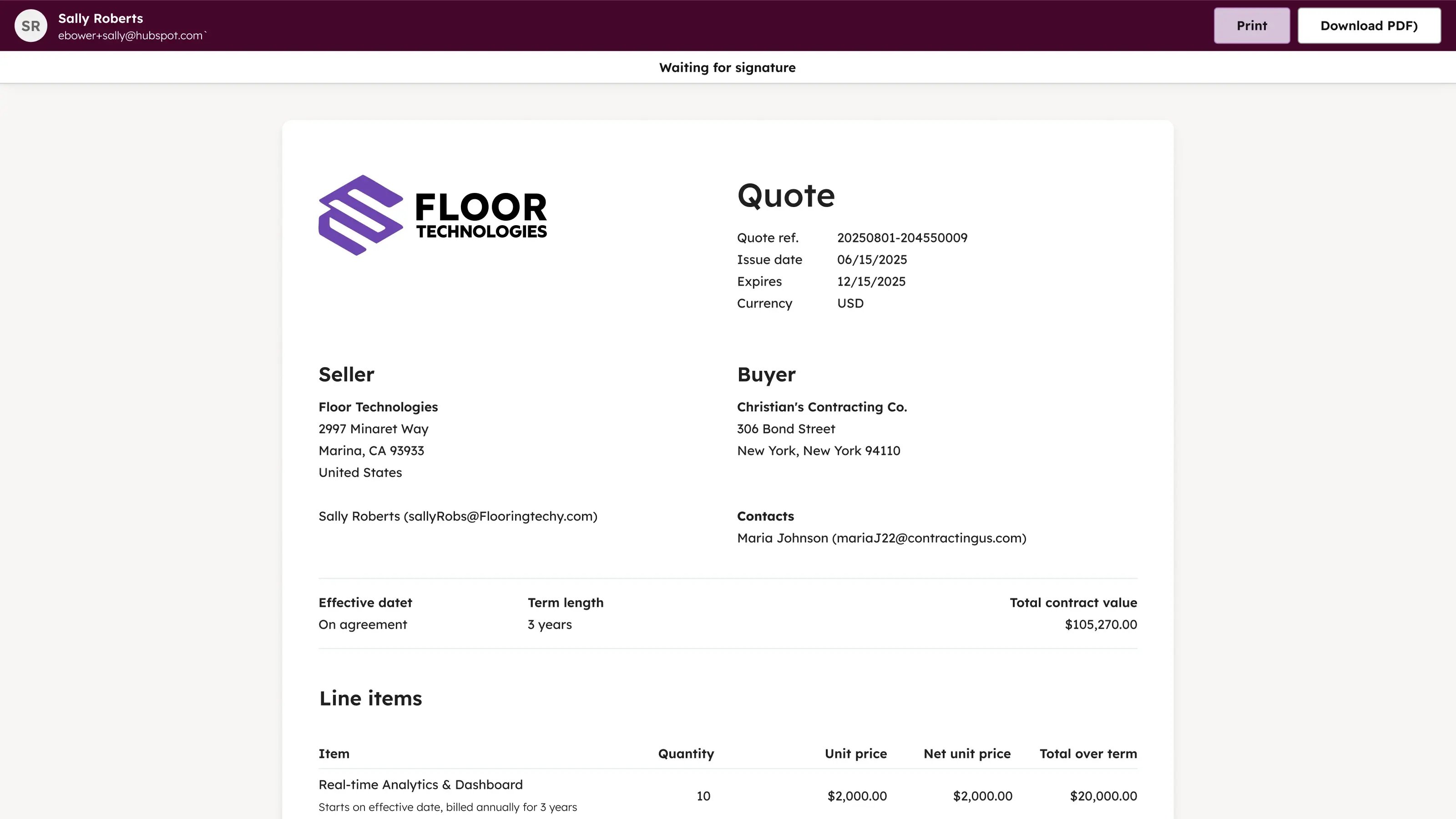
This isn't just a faster version of what existed before. The builder has real architectural depth:
- No-Code Builder: Full control over branding, layout, and section structure without touching a single line of code.
- Advanced Customization: Custom-coded modules for organizations that need sophisticated, unique buyer experiences.
- Breeze AI Intelligence: Pulls from CRM data, emails, and meeting transcripts to generate cover letters and quote summaries automatically.
The practical result: a rep comes out of a discovery call, opens the deal record, and builds a polished, accurate quote using data that's already in HubSpot. No copy-paste from notes. No back-and-forth with someone else to format the document.
For the teams still operating with a shadow spreadsheet as their product catalog, this is the moment to retire it.
Tools to Close, Track, and Automate
Quote creation is only the start. Revenue Hub also delivers a set of closing and automation tools designed to eliminate the manual steps that drag out deal cycles.
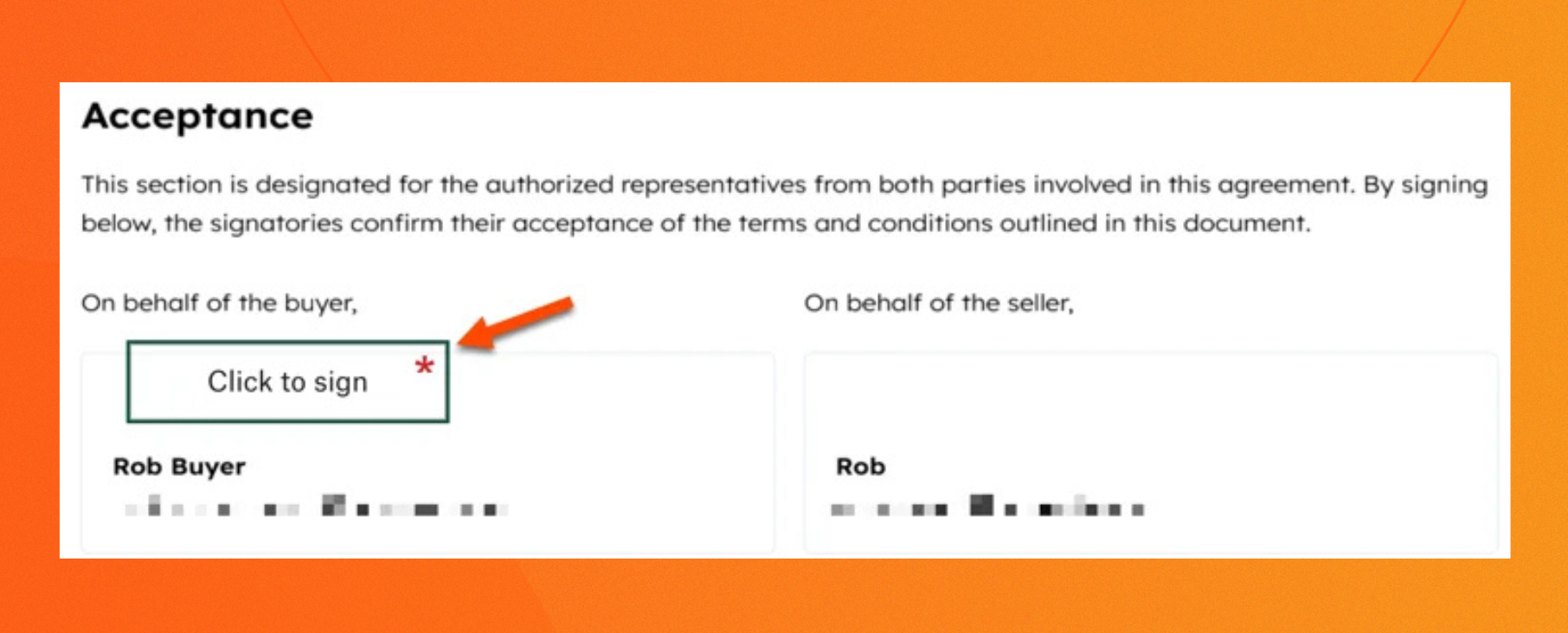
E-Signature: Buyers sign directly on the quote. Identity verification and signer reassignment are built in. No third-party tool required.
Quote Reporting: Buyer engagement metrics, views, downloads, signature status, and pipeline health are surfaced in a single dashboard. If a buyer opened the quote three times and hasn't signed, that's visible. Sales managers can coach from actual data instead of asking reps to self-report.
Workflow Automation: Automated workflows can now generate quotes, chase signatures, and route approvals without manual intervention. Approvals that used to live in someone's email inbox can be managed with proper governance, audit trail, and logic.
The combination of these tools doesn't just speed up time to close. It also makes the entire process visible and manageable, which matters especially for leaders trying to forecast with confidence.
If AI-powered automation is part of your roadmap, this is a strong place to start. Clean product data, accurate pricing, and well-defined approval rules will make Breeze's output sharper. Messy inputs will produce messy quotes, faster.
What Didn't Change
With any major rebrand comes a reasonable question: what did I lose?
The answer here is: nothing.
Every Commerce Hub feature carries over. Existing users don't lose access to anything they were already using. The rebrand reflects expanded scope, not a platform swap. If Commerce Hub was working for your team, Revenue Hub is the same foundation with more tools built on top of it.
The Bigger Picture
HubSpot has been building toward this for years. Commerce Hub Unpacked, published back in October 2025, outlined the vision: every piece of the revenue puzzle connected inside a single CRM. Deals, CPQ, Billing, Payments, and Reconciliation, all running on one data model.
Revenue Hub is that vision, further realized.
The companies that will get the most from it are the ones who've already done the work to align their revenue teams in one system and built a data foundation they can trust. For them, Revenue Hub is acceleration. For teams still operating with fragmented tools and inconsistent CRM data, the tools are available but the foundation work comes first.
Growth creates complexity. Systems create clarity.
If your team is ready to put revenue in the flow of work, book a 30-min meeting with us. We'll show you where to start.