Legacy CRMs like Salesforce and D365 are often positioned as the gold standard for growing companies. They promise unmatched flexibility, deep customization, and the ability to support almost any business model.
For organizations with complex requirements, dedicated admin resources, and highly customized workflows, that promise can be very real.
However, that same flexibility can introduce tradeoffs. As companies evaluate CRMs, the decision is rarely about which platform is more powerful. It is about how much complexity your organization is prepared to manage, and how closely your CRM aligns with day-to-day operations across teams.
Below is an unbiased look at how HubSpot differs from legacy CRMs, and where each platform tends to perform best.
Customization and Data Architecture
Traditional CRMs are known for their nearly unlimited customization. Custom objects, fields, automations, and integrations can be built to match extremely specific requirements.
Which is a strong fit for organizations that require a completely bespoke software environment. The tradeoff is that this flexibility often requires experienced administrators or developers to design, maintain, and evolve the system over time.
University of Chicago Medicine, a leading academic health system, turned to Salesforce to unify and activate patient data across health and marketing systems, enabling personalized engagement at scale and improving experiences across the entire care journey. By leveraging Data 360 with Health Cloud and Marketing Cloud to break data out of silos and build more than 100 targeted segments tailored to specific health needs and behaviors, UChicago Medicine now delivers highly personalized outreach and care support.
Kalee Hildreth, Executive Director of Marketing Operations at UChicago Medicine, said, “We can drill down to the level of folks who missed their annual primary care appointment, and reach out with, ‘Hey, here are all the benefits of visiting your physician every year.’ We can really personalize outreach to help people understand the value of getting that care.”
HubSpot takes a more modern approach to enterprise architecture. It offers the same powerful custom objects and strong data governance, while maintaining guardrails that prevent overengineering.
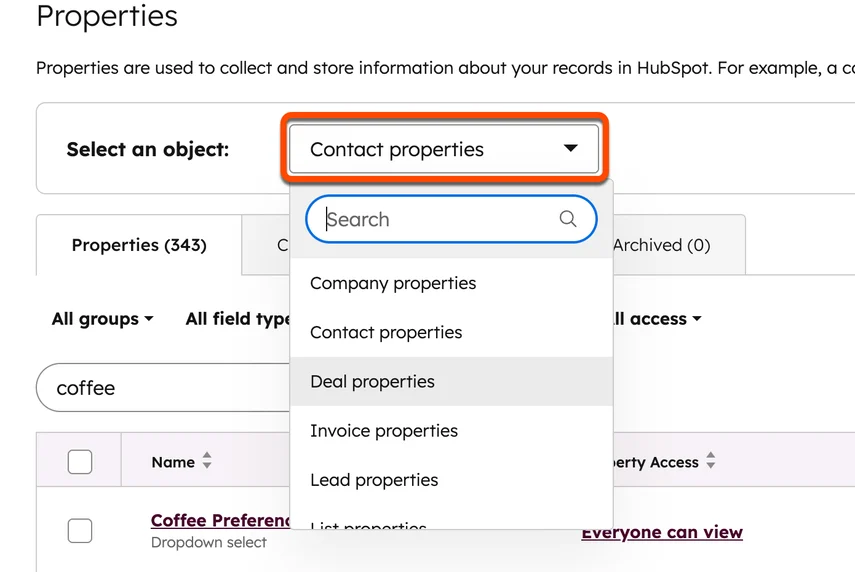
For many teams, this balance is beneficial. You get enough flexibility to support growth without introducing unnecessary technical debt. HubSpot works particularly well for companies that want their CRM architecture to evolve without becoming fragile or overly complex.
Motorola Solutions used HubSpot’s Data Hub and Data Studio to unify more than 123,000 customer records, giving its marketing team real-time access to trusted data and revealing an 80 % adoption gap that unlocked millions in new revenue opportunities. This unified approach helped marketers move faster and make smarter decisions while advancing the company’s mission to protect people and places.
“Data Studio opens the door to behavior-based marketing — triggered by how customers actually use our products,” said Steven Weingarth, Global Director of Growth Marketing at Motorola Solutions
Ease of Use and Adoption
Legacy CRMs are complex, and that complexity comes with a learning curve. Many organizations invest heavily in training, documentation, and internal enablement to drive adoption. When done well, this can support sophisticated workflows across large teams. When adoption is not actively managed, usage often drops and data quality suffers.
HubSpot's modern solution places a stronger emphasis on usability. The interface is intuitive, and most users can be productive quickly without extensive training.
Sales, marketing, and service teams tend to adopt HubSpot faster because the system is designed around how people actually work. For organizations where adoption has historically been a challenge, this difference is often significant.
Cross-Functional Alignment
CRMs like Salesforce and D365 are frequently implemented as a sales-centric platform and then expanded to support other teams through additional products and integrations.
This approach works well in organizations with strong internal alignment and clear ownership across departments. It can become challenging when teams operate in silos or when integrations are not tightly managed.
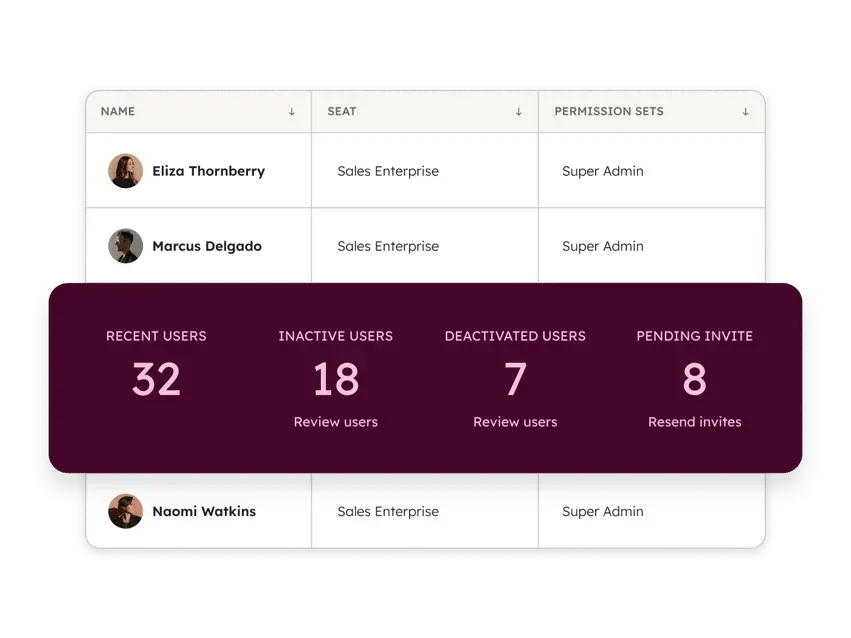
HubSpot was built with cross-functional alignment at its core. Marketing, sales, service, and operations all work from the same platform and the same customer record. This unified experience reduces friction at handoffs and makes it easier for teams to share context throughout the customer journey.
Available Integrations and Ecosystem
CRMs like Salesforce, have large integration ecosystems on the market. Nearly any system can be connected, but those integrations are often custom-built or heavily configured. This gives organizations maximum flexibility, but it also introduces risk. Integrations require ongoing monitoring, testing, and ownership. When they break, data gaps appear quickly and teams often do not know where the issue lives.
HubSpot takes a more opinionated approach to integrations. Many common tools connect natively, share data models cleanly, and require less ongoing maintenance. While HubSpot may not support every edge-case integration out of the box, it reduces integration sprawl and operational fragility. For most growing companies, fewer, well-managed integrations lead to more reliable data and better cross-team trust.
Ongoing Maintenance and Total Cost of Ownership
Traditional CRMs typically require ongoing investment in administration, development, and technical support. For organizations prepared to make that investment, their platform can scale almost indefinitely. For others, maintenance costs and internal complexity can grow faster than expected.
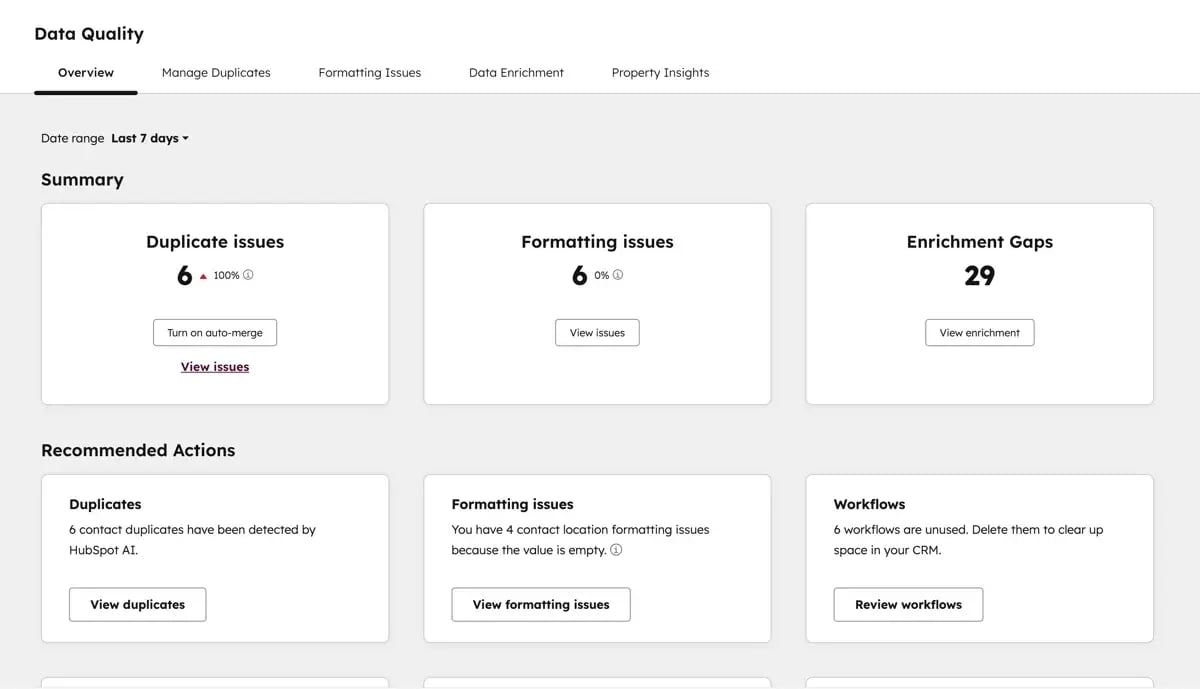
HubSpot has a lower operational overhead. While more advanced features live in higher tiers, many organizations appreciate the ability to scale investment over time as ROI becomes clear. The result is often a more predictable total cost of ownership.
Which Platform Is Right for You
Legacy enterprise CRMs are often the right choice for organizations that require a completely bespoke, custom-coded environment and have the engineering resources to maintain it. They excel in environments where static control outweighs agility.
HubSpot is the choice for the modern enterprise. It is best suited for complex organizations that prioritize speed, adoption, and data unification over infinite customization.
The choice is no longer about "Legacy vs. Modern." It is an operational decision about agility. The best platform is the one that allows your enterprise to move at the speed of the market.